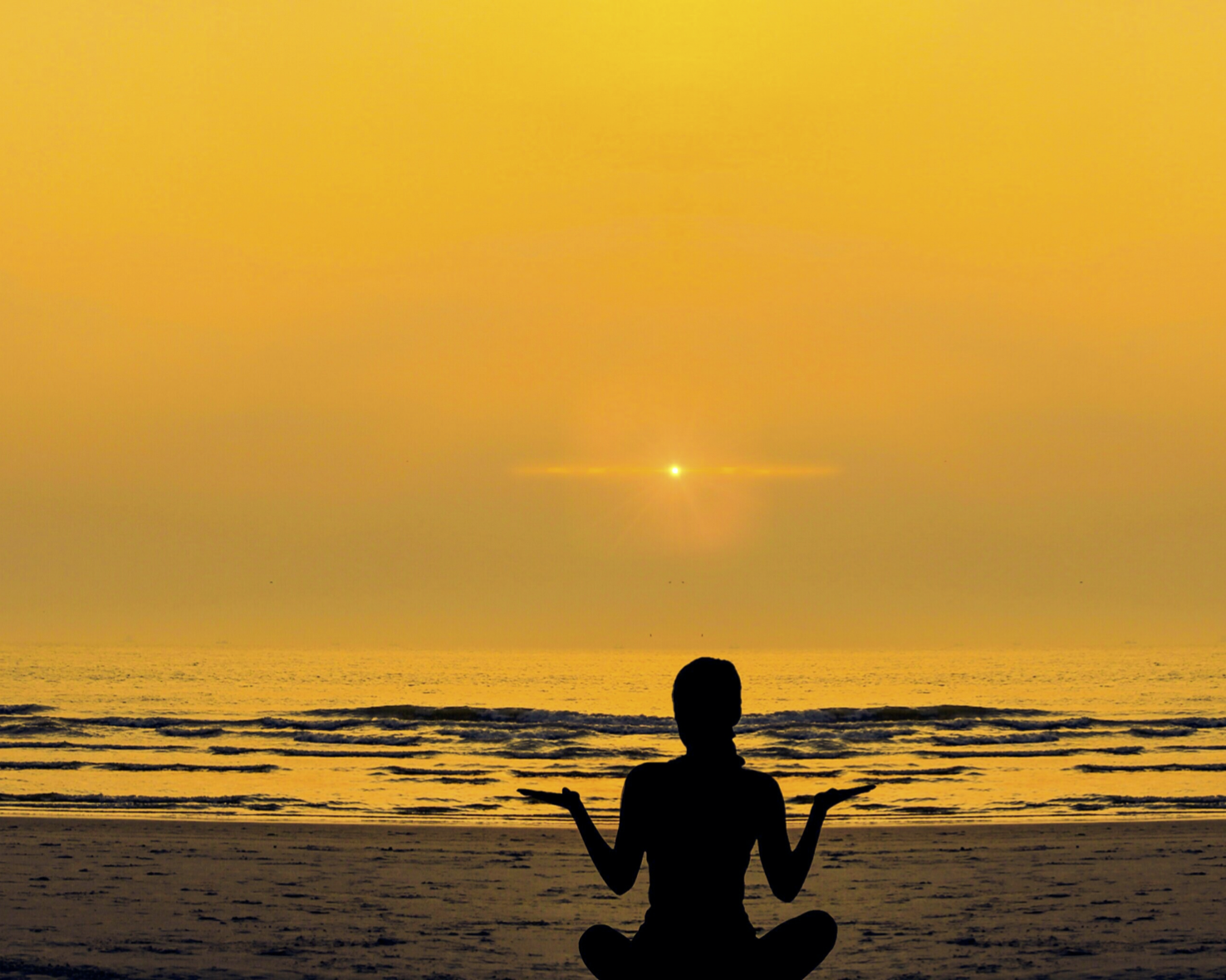
Yoga helps relieve anxiety naturally. According to Harvard Medical School, various yoga practices can lessen intense stress responses, which makes them useful for managing anxiety and depression. Like other calming techniques—such as meditation, relaxation, exercise, or spending time with friends—yoga serves as a way to soothe oneself.
Yoga helps lower stress and anxiety, which can improve how the body reacts to stress. This leads to a slower heart rate, lower blood pressure, and easier breathing. Additionally, yoga may boost heart rate variability, showing the body’s better ability to handle stress.
The chakras store the anxiety
Feeling anxious makes it hard to settle the mind and body for Yoga. The mind often comes up with excuses to skip class. However, after a class, the feeling of anxiety usually lessens.
A yoga practice helps to release anxious energy. It moves the life force (prana) from the solar plexus chakra (Manipura chakra) down to the root chakra (Muladhara chakra). This will make you feel grounded, solid, and secure (kapha).
The word “chakra” means “wheel” in Sanskrit and refers to a spiritual energy centre in the body. You can read more about the chakras here.
5 ways Yoga relieves anxiety
A regular Yoga practice is an act of self love with many benefits, such as better breathing, stretching, relaxation, inner peace, and a supportive community. All of these are included in one class. Yoga (asana) is not just for the physical body to build strength and flexibility. Actually Yoga works on so many levels including the mind, body and spirit.
When you realise you are having an anxiety attack, take a moment to check in and ask yourself the following: –
- Where do I feel the sensation in my body?
- Am I concerned with something that is happening now, in the past or future?
- How smooth, subtle and long is my breath?
- Do I feel restless and unsettled?
- What do do I need right now, am I hungry or cold?
Anxiety, Ayurveda and Vata dosha
Yoga and Ayurveda together offer many tools to help manage your vata, pitta, or kapha imbalances. Anxiety is felt in both the mind and body, causing vibrations as thoughts race. It leads to the Ayurveda symptom of Vata, which is mainly made up of air and ether, moving through the body via prana (life force).
People with an imbalanced Vata dosha often feel anxious. Even those who aren’t primarily Vata can develop increased Vata after a traumatic experience. Additionally, growing up in a high-stress environment may feel normal until they recognize their anxiety.
Motivating oneself to change can be tough for a kapha, a pita often sees external issues as the problem, and a vata struggles to slow down and follow a plan. To learn more about Ayurveda, you can take our simple test here.
Can you feel the vibrations?
‘Can you feel the vibes man’ was a common phrase in the 1960s, linked to the hippie culture that embraced a sensitive, vegetarian, and peace-loving lifestyle. Vata is a sensitive body type, and just the tone of the environment or how others interact can be upsetting.
The feeling of anxiety is tiring and is connected to fear. The effects of fear or anxiety can cause Vata symptoms such as insomnia, constipation, fast movement, rapid speech, shallow breathing, poor digestion, and restlessness.
Ayurveda states like increases like
Feeling anxious can make it hard to relax and calm the mind. People with anxiety tend to connect with others who feel the same way. However, yoga and Ayurveda offer many helpful tips to lower anxiety.
12 practical suggestions to reduce anxiety
- Track back after an anxiety attack to view how its started (and subsided)
- Keep a journal of your discoveries
- Reach our to a friend or therapist
- Go for a walk in nature
- Put your hands in the garden dirt
- Lie down and watch the clouds float by
- Join a yoga breathing and asana practice
- Do our relaxation breathing exercise


