Category: Yoga therapy

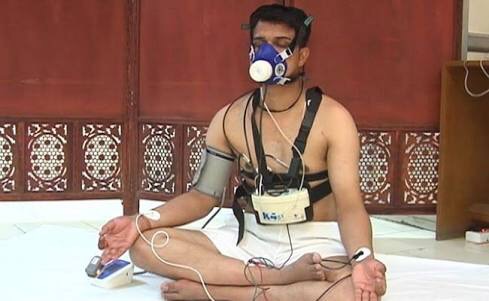
  • Yoga and Science 

    Yoga and Science 

    Yogis do not need scientific proof of yogas effectiveness 

    Yoga helps us create space in the body, mind & heart

    Yogic breathing decreases blood pressure 

    When in a stressful situation a yogi automatically regulates their breathing to alleviate stress 


    Yoga strengthens the power of the mind – stress is the mind overworking – yoga brings the mind & body into focus 

    Immune system is improved as stress is reduced 

    Yoga changes the brain at the cellular level 

    Ultimately yoga is about self realisation – the juice of yoga is to really know the truth about who you are 

    The transformative power of yoga enables you to move through blockages and find that power within yourself 


    Yoga helps you to fulfil your personal spiritual objective 

    There is a general public misconception that yoga may not be applicable to your particular set of circumstance 

    In the media yoga is portrayed as a complex set of postures that require flexibility 

    In yoga therapy we adjust postures to suit the individual 

    Those that are engaged in yoga are in a practice of evolution to fix themselves to be in harmony & health

    Many people are turning to yoga& mindfulness practises throughout the world they are becoming :- 

    More aware – more self regulating – more compassionate – more immune to stress – more high minded – less materialistic – as this gets into society we can transform society to be the compassionate giving beings we are truly capable of 

    ….time well spent watching this

    http://upliftconnect.com/watch-science-behind-yoga/

  • Dear Prudence 

    Dear Prudence 

    The Americans are so advanced in personal development!
    There is money to be made in offering teacher training courses or coaching …

    How great to have a yoga teacher on every corner – I remember the days when it seemed like a pub 

    …the Dalai Lama said 12 step programs are the best thing to happen in the 21st century I read 

    Learning to reparent self from dysfunction combined with yoga 

    The ancient yoga teachings from Patanjali and the rishis said it all – 

    …..but the challenge today is – how to implement these teachings in a daily life without strong community support?

    The Buddha would say use the tools of the Sangha, Sala and the Dhamma on a daily basis 

    ….we are pulled constantly into the maya (illusion) of daily/self existence – the prehistoric brain on alert

    …we have to function in society to be self supporting to make money to trade for our needs – (or ask for a hand out)

    ….we are offered tools from so many different traditions & finding the tool/key that works for you is a noble quest 

    ….many blessings to the seekers – those who know they need to look for the key to keep coming back to a state of balance on a spinning and tilted planet – with billions of people who are also off kilter – 

    Combined with the pumping media/politicians espousing – more is best – we need growth – lets keep growing the economy!

    I think to cultivate Wisdom is to be aware of our addictive habits and triggers and to have the willingness to choose to live life free of these behaviours that control our re actions 

    Willing and open to make new choices to enhance the quality of life combined with plenty of prudence to follow through 

    … then surrender your will to the gods/universe/nature in a yoga pose – bliss – (something more grander than our frail manipulative powers ) is certainly a noble cause and vision 

  • Back & Neck problems

    Back & Neck problems

    Yoga may relieve the agony associated with back and neck problems. It also boosts strength and flexibility, increases relaxation and encourages tight muscles to release. A 2011 study conducted by the National Center for Complementary and Alternative Medicine showed that a 12-week yoga practice decreased chronic low-back pain better than traditional treatments. Yoga accomplishes this by addressing the five different movements of spine: it flexes, extends, bends to the side, rotates and lengthens, also called axial extension. Show your spine some love by practicing yoga poses that target the back and neck and work the five movements of the spine. As with all yoga poses, it is important not to push past your body’s physical limitations.

    down dog

    Flexion

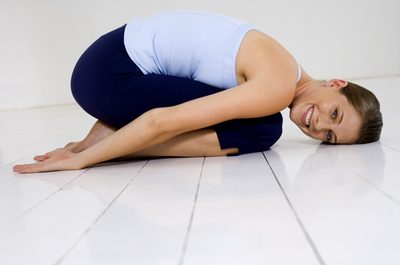
    Bend forward and touch your toes. That’s flexion, a movement of the spine that boosts circulation to your brain and vital organs, and stretches your leg and back muscles. Yoga poses that emphasize flexion include Cat pose, Standing Forward Bend and Child’s pose. To enter Child’s pose, kneel on the floor, sitting on your heels with your big toes together and your knees separated about the width of your hips. Reach your arms in front you, palms facing down, and lay your torso in between your thighs, with your forehead resting gently on the ground. Exhale and inhale several times, expanding wide throughout your ribcage and back.

    Extension

    Extension is a movement of the spine that involves reaching your spine upward while your spinal discs expand in front and compress in back. Yoga works extension with backbend postures such as Cobra, Bridge, Camel and Wheel. These extension postures stretch and strengthen the secondary curve of the cervical and lumbar spines, and are natural stress-reducers. Cobra pose both protects against injury and relieves stubborn back pain. Lie on your stomach with your legs straight out behind you and your chin pressed gently into the floor. Place your hands next to your chest, with your palms facing down and your elbows bent. As you slide your chest forward, roll your shoulders back and lift your chest as high off the ground as possible. Your hands should remain in place, your arms should be bent, and your low ribs should remain on the floor. Look slightly down or in front of you, but not up. You don’t want to strain the neck by lifting it up and back.

    Lateral Flexion

    Your spine is in lateral flexion whenever you bend to your right or left side. Your spinal discs expand on your left and compress on your right when you bend to the right, and vice versa. Bending to the side also strengthens your oblique muscles, improves your balance, and encourages a flexible spine. Side Angel, Half Moon and Triangle are a few of the poses that work lateral flexion. It is easiest to enter Triangle pose from Warrior II. With your right leg out in front, reach your right hand and torso to the right, directly over the right leg. Don’t face the torso forward, but keep it faced out to the left. Bend from your hip, resting your right hand on your shin, ankle or the floor on the outside of your right foot. Stretch your left arm up to the ceiling and follow with your gaze.

    Axial Rotation

    Axial rotation involves twisting, or rotating your spine. You twist and turn your body throughout the day, and if the spine is not kept in great shape a quick movement, such as a look behind you, could become a disastrous injury. Yoga implements many different twisting postures that lubricate the spine and increase your range of motion. Revolved, or Twisting Triangle, is an advanced pose, so be sure to listen to your body as you are practicing it. It is also helpful to use a block when first learning Revolved Triangle. It is easiest to approach Revolved Triangle from a straight-legged Warrior II pose. Square your hips to the front and point your right leg forward and your left leg back. Your left foot should be rotated to the side at a 90-degree angle and your feet should have a heel-to-heel-alignment. Keep your lower body stationary, as you twist your upper body to the right and bring your left hand to the outside of the right foot, ankle, or shin. Bring your right arm up to the ceiling. Only look up at your fingertips if your neck says it is okay. Hips should remain level and parallel to the floor. Repeat the pose on the left and enjoy a flexible, pain-free spine.

    Axial Extension

    Axial extension is a movement of the spine that straightens and lengthens your spine, allowing you to expand your breathing, stretch your back muscles and lengthen your spine upward. Downward-Facing Dog is an inversion pose in which the spine is in axial extension. This pose lengthens the entire body while expanding and strengthening the upper back. To enter Downward-Facing Dog, come to your hands and knees, as though you are about to crawl. Curl your toes under and shift your bottom up into the sky, raising your hips and straightening your legs. Your feet should be hip-distance apart. Spin your thighs inward and press your heels to the floor. As you lift your legs, press your arms into the ground. Check to see that your arms are directly under your shoulders. Make sure your fingers are spread wide and your palms are flat to the floor. If you have a wrist injury, grip the floor with your fingertips rather than pressing your palms flat. Let your head hang freely, releasing all weight from your neck, and let that overworked spine stretch.

    http://woman.thenest.com/five-movements-spine-related-yoga-3174.html

Call now