Author: Zoe

  • Does it Come Back to Breathing?

    Does it Come Back to Breathing?

    My very first yoga class was with an Iyenga teacher in Pitt St, Sydney back in 1986 and she said to me “the answer Zoe is in the breath”….

    Given the smooth muscle properties and the control that the autonomic nervous system may have over the fascial network, perhaps a potential window into effectively dealing with increased myofascial tone can circle around to breathing.
    relax and breath

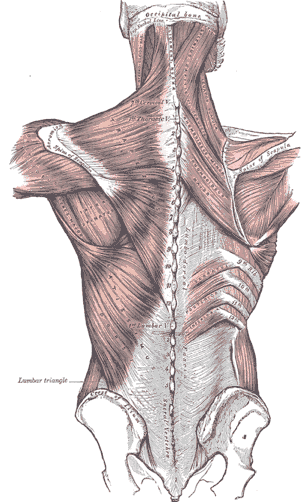
    Respiratory function is on aspect of the autonomic nervous system that we actually have direct control over.  We can change our breathing and help to elicit a parasympathetic response to allow for greater relaxation and potentially less overall tissue tone/tension, hopefully leading to more of a comfortable state of being a decreased threat perception.  Additionally, the role of the diaphragm in stabilizing the lumbar region cannot be overlooked and the fact that it shares a fascial connection with the quadratus lumborum (as well as the psoas major) and the transverse abdominus fibers invest themselves into part of the diaphragm means that the diaphragm is in a potentially prime position to have an influence over the thoracolumbar fascia, since both of these muscles invest into layers of that fascial structure.
    Thoracolumbar Fascia – An Area Rich with Activity


  • Back & Neck problems

    Back & Neck problems

    Yoga may relieve the agony associated with back and neck problems. It also boosts strength and flexibility, increases relaxation and encourages tight muscles to release. A 2011 study conducted by the National Center for Complementary and Alternative Medicine showed that a 12-week yoga practice decreased chronic low-back pain better than traditional treatments. Yoga accomplishes this by addressing the five different movements of spine: it flexes, extends, bends to the side, rotates and lengthens, also called axial extension. Show your spine some love by practicing yoga poses that target the back and neck and work the five movements of the spine. As with all yoga poses, it is important not to push past your body’s physical limitations.

    down dog

    Flexion

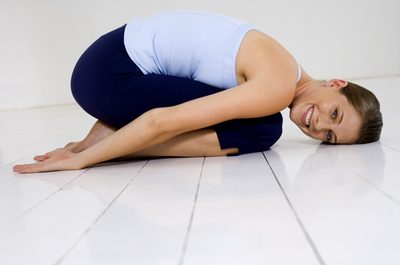
    Bend forward and touch your toes. That’s flexion, a movement of the spine that boosts circulation to your brain and vital organs, and stretches your leg and back muscles. Yoga poses that emphasize flexion include Cat pose, Standing Forward Bend and Child’s pose. To enter Child’s pose, kneel on the floor, sitting on your heels with your big toes together and your knees separated about the width of your hips. Reach your arms in front you, palms facing down, and lay your torso in between your thighs, with your forehead resting gently on the ground. Exhale and inhale several times, expanding wide throughout your ribcage and back.

    Extension

    Extension is a movement of the spine that involves reaching your spine upward while your spinal discs expand in front and compress in back. Yoga works extension with backbend postures such as Cobra, Bridge, Camel and Wheel. These extension postures stretch and strengthen the secondary curve of the cervical and lumbar spines, and are natural stress-reducers. Cobra pose both protects against injury and relieves stubborn back pain. Lie on your stomach with your legs straight out behind you and your chin pressed gently into the floor. Place your hands next to your chest, with your palms facing down and your elbows bent. As you slide your chest forward, roll your shoulders back and lift your chest as high off the ground as possible. Your hands should remain in place, your arms should be bent, and your low ribs should remain on the floor. Look slightly down or in front of you, but not up. You don’t want to strain the neck by lifting it up and back.

    Lateral Flexion

    Your spine is in lateral flexion whenever you bend to your right or left side. Your spinal discs expand on your left and compress on your right when you bend to the right, and vice versa. Bending to the side also strengthens your oblique muscles, improves your balance, and encourages a flexible spine. Side Angel, Half Moon and Triangle are a few of the poses that work lateral flexion. It is easiest to enter Triangle pose from Warrior II. With your right leg out in front, reach your right hand and torso to the right, directly over the right leg. Don’t face the torso forward, but keep it faced out to the left. Bend from your hip, resting your right hand on your shin, ankle or the floor on the outside of your right foot. Stretch your left arm up to the ceiling and follow with your gaze.

    Axial Rotation

    Axial rotation involves twisting, or rotating your spine. You twist and turn your body throughout the day, and if the spine is not kept in great shape a quick movement, such as a look behind you, could become a disastrous injury. Yoga implements many different twisting postures that lubricate the spine and increase your range of motion. Revolved, or Twisting Triangle, is an advanced pose, so be sure to listen to your body as you are practicing it. It is also helpful to use a block when first learning Revolved Triangle. It is easiest to approach Revolved Triangle from a straight-legged Warrior II pose. Square your hips to the front and point your right leg forward and your left leg back. Your left foot should be rotated to the side at a 90-degree angle and your feet should have a heel-to-heel-alignment. Keep your lower body stationary, as you twist your upper body to the right and bring your left hand to the outside of the right foot, ankle, or shin. Bring your right arm up to the ceiling. Only look up at your fingertips if your neck says it is okay. Hips should remain level and parallel to the floor. Repeat the pose on the left and enjoy a flexible, pain-free spine.

    Axial Extension

    Axial extension is a movement of the spine that straightens and lengthens your spine, allowing you to expand your breathing, stretch your back muscles and lengthen your spine upward. Downward-Facing Dog is an inversion pose in which the spine is in axial extension. This pose lengthens the entire body while expanding and strengthening the upper back. To enter Downward-Facing Dog, come to your hands and knees, as though you are about to crawl. Curl your toes under and shift your bottom up into the sky, raising your hips and straightening your legs. Your feet should be hip-distance apart. Spin your thighs inward and press your heels to the floor. As you lift your legs, press your arms into the ground. Check to see that your arms are directly under your shoulders. Make sure your fingers are spread wide and your palms are flat to the floor. If you have a wrist injury, grip the floor with your fingertips rather than pressing your palms flat. Let your head hang freely, releasing all weight from your neck, and let that overworked spine stretch.

    http://woman.thenest.com/five-movements-spine-related-yoga-3174.html

  • Jane

    1) Lie on your back

    concentrate on your breathing

    count the length of the inhale – hold 1 for the pause between the breaths and count the exhale

    Focus on extending your exhale

    expand your rubs with the inhale and go down with the exhale

    Do 6 conscious round of breaths

    jane 1

    2)  Standing feet hip width apart – raise ONE ARM ONLY above your head and go Forward as in the video – do this X 3 then the other arm X 3

    3) have your feet a metre apart and interlock your hands behind on the exhale go forward raising your arms towards the back of your head

    Close your eyes when going forward and focus on increasing your exhale – hold for a count of 3

    Forward bends are calming

    4) Lie on your back

    Raise both knees on the inhale and exhale as you lower X 6

    Apanasa is very balancing and good for your core strength  

    5) Focus on your breathing with your hands above your chest and feel the ribs expand and u inhale and exhale – count the duration of the breaths and increase the exhale – be aware of the pause between the breaths

    6) Twist

    Cross your left knee over your right

    Adjust your hips slightly by moving to the left

    Take your knees over to the right on the exhale

    Stay there for 6 breaths

    Extend your exhales

    Then rotate your left arm around the body – exhale as the arm goes down and inhale as arm goes up

    X 1 in each direction

    Lie and relax your arms and shoulders

    Always create space between your ears and shoulders

    Repeat with the other leg and arm

    7) Forward bend

    Cross legs and go forward X 6 breaths

    Then cross legs in other direction and go forward X 6

    8) Rest – relaxation breathing

    If you don’t have a bolster to open your chest just lie on the floor and focus on your breathing with your eyes closed

    1. Inhale to a count of 4

    Exhale to a count of 4

    Four times

    2. Inhale to a count of 4

    Exhale to a count of 6

    Four times

    3) Inhale to a count of 4

    Exhale to a count of 8

    Four times

    Magnesium supliment

    This is very good – take one small spoon ( inside ) with water –  before bed it will reduce the cramps – only get this brand and the powder

    jane 9

    Uttanasana

Call now